

Whoa!
I still get a little buzz when I pull up a fresh transaction on Solana. My instinct said this would be dry, but actually the chain tells stories — messy, surprising stories. At first glance you’re just looking at logs and lamports. But dig a bit and patterns pop out. Here’s the thing.
Explorers are the magnifying glass for on-chain life. They let you follow coins and contracts like footprints in the snow. Sometimes it’s a simple address lookup. Other times it’s a chain of cross-program invocations that explain why funds moved, and why gas spiked. Seriously?
Okay, so check this out—my favorite everyday use is troubleshooting wallet issues. If a transfer „failed“ in your wallet, you can still see the transaction on-chain, including compute units consumed and the exact error message. That error often points right at the program or instruction that balked. I’m biased, but that level of forensic detail makes Solana explorers indispensable.
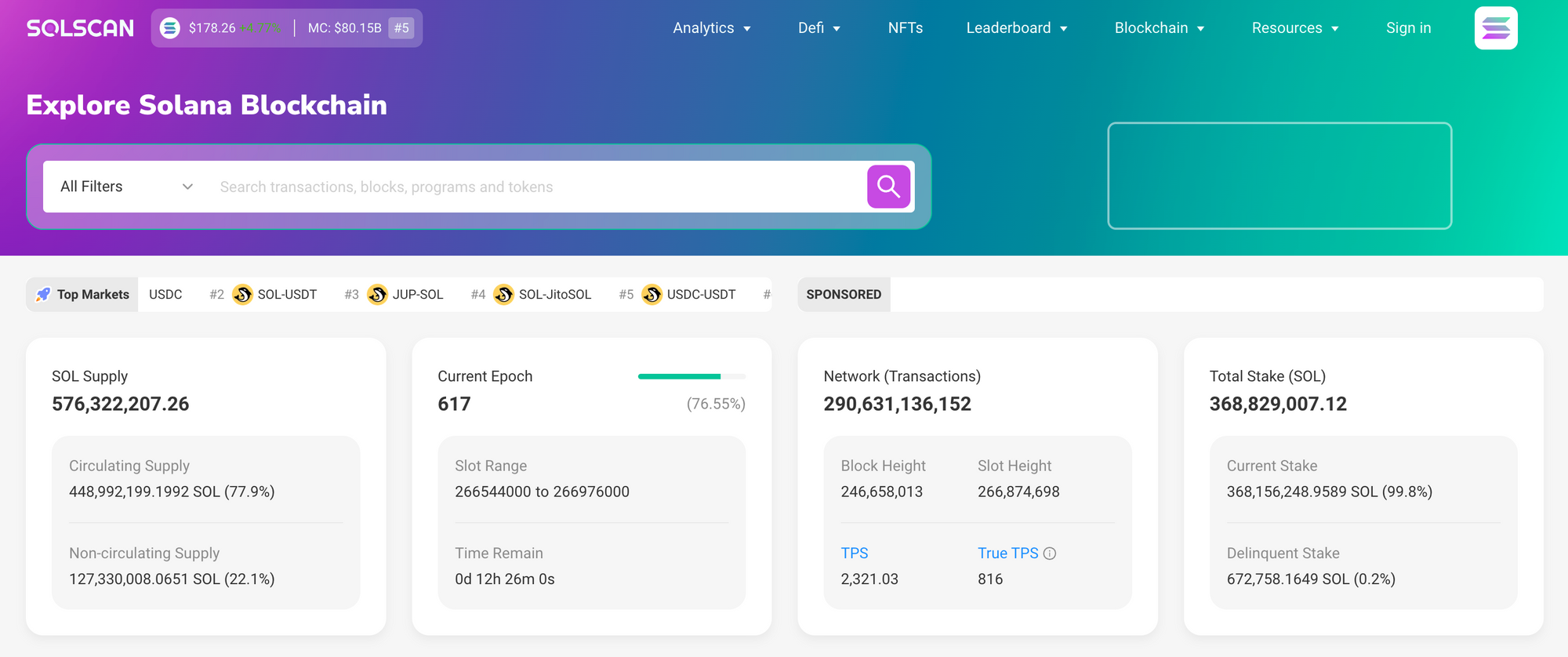
On a technical level, Solana explorers expose: signature status, block height, slot timing, inner instructions, pre/post balances, token balances, and program logs. Some explorers layer analytics on top of this raw data to show you token holder distributions, trading volume, or top interacting contracts. Initially I thought raw logs would be enough, but then realized visualization drastically speeds up understanding — humans are visual animals, after all.
Here’s what bugs me about some tools. They can be slow to index during cluster congestion, or they omit CPI chains in an attempt to simplify the UI. That simplification is useful for beginners though — the tradeoff is less forensic power. On one hand beginners appreciate clarity; on the other hand advanced users need the full trace. Hmm…
If you want a quick primer on features to look for, start with these core capabilities: reliable signature search, token holder lists, program ID exploration, and API access for automated queries. Those basics cover most scenarios from simple confirm-and-send checks to sophisticated analytics pipelines. Also look for historical charts, and export options for CSVs — they save a lot of time. Really useful when you’re correlating on-chain events with off-chain happenings, like airdrop announcements.
Why tie analytics to explorers?
Explorers are data plus context. Analytics without block-level tie-ins can mislead you, because aggregated metrics hide the actual transactions that create those metrics. For example, a pump in volume could be a handful of automated market maker interactions or a single whale moving tokens across chains. The drill-down matters, and that’s where a tool that combines both lens and scale wins. On that note, if you want a practical place to start, check the solscan explorer official site — it’s one of the first stops I take.
After using explorers for months I built a little mental checklist. First: confirm the slot and timestamp. Then: review the instruction list and inner instructions. Next: read the program logs for explicit revert reasons. Finally: map token transfers to on-chain events or notable addresses. This sequence narrows down the cause of almost every mystery I chase. Sometimes you find a benign reroute; other times you uncover replayed transactions or front-running attempts.
There’s also the program audit angle. If you’re vetting a program, explorers let you see upgrade authority activity and which deploys touched that program ID. That’s crucial for trust assessments. Initially I assumed on-chain immutability made any contract permanent, but then learned that upgradeable loaders change that assumption — so seeing upgrade actions matters. I’m not 100% sure of every loader nuance, but the general rule stands.
For NFT collectors, solana explorers reveal provenance. You can track mint transactions, creators‘ wallets, and metadata URIs. That provenance often explains a floor price shift. (Oh, and by the way… I once tracked a sudden creator wallet sale that triggered a mini-dump — lesson learned.) The marketplace UI might show a listing, but the explorer shows the original minting event and the exact royalties encoded.
Analytics platforms layered on explorers offer cohort analysis, retention of token holders, and whale activity charts. These help projects and traders make decisions without guessing. Still, I prefer reconciling charts with raw transactions. Charts can hide nuanced behavior, like micro-sandwich trades or cross-program arbitrage. On one hand charts give scale; though actually raw traces give truth.
Practical tips for power users:
1) Use address labels saved in your own notes. They pay off. 2) Export CSV of transfers during an incident, and filter by program ID. 3) Compare compute units used across similar transactions to spot anomalies. 4) Cross-check with RPC node timestamps if slot timing looks off. These steps often reveal weirdness faster than a forum thread. Somethin‘ about seeing the raw data calms the panic.
When things go sideways — like sudden spam or airdrop scams — explorers let you trace funds back to bridges, mixers, or soft spots in a contract. That tracing isn’t always linear; funds hop through intermediate program IDs to obscure origin. Tracking those hops is detective work. It’s also the part that feels the most satisfying to me, like following clues in a mystery novel but with lamports instead of footprints.
Common questions (short answers)
How do I verify a transaction succeeded?
Look for the final signature status and program logs; a „Confirmed“ signature with no error in logs usually means success. If a transaction consumed an unusual number of compute units, inspect inner instructions — they often explain retries or heavy operations.
Can explorers show real-time analytics?
Some do near real-time indexing but indexing lag can occur during heavy network activity. For near-instant needs use a combination of an RPC node and the explorer’s API, and be ready to accept small delays during spikes.
What’s an explorer can’t tell me?
Explorers can’t reveal off-chain agreements or private key access, and they won’t show intent behind a transfer. They show what happened on-chain, not why humans did it — you still need context from project comms or social channels.
